
 Click main image to view in full screen. Unlock all 29 preview images:
Service Design (Design Thinking for Services) – PowerPoint PPTX Template
PowerPoint (PPTX) + supplemental PDF 143 Slides


BENEFITS OF THIS DOWNLOADABLE POWERPOINT DOCUMENT
- Master Holistic Ecosystems: Integrate Systems Thinking to navigate complex interconnections and architect end-to-end service excellence that goes far beyond fixing isolated touchpoints.
- Visualize Hidden Dependencies: Use Service Blueprinting to bridge the gap between frontstage customer actions and backstage processes, revealing operational risks and market opportunities before they occur.
- Align Strategy with Human Needs: Leverage the Value Proposition and Business Model Canvases to ensure your service innovations are both deeply desired by customers and strategically profitable for your business.
DESIGN THINKING PPT TEMPLATE DESCRIPTION
SERVICE DESIGN: STRATEGIC DESIGN THINKING FOR SERVICES
Design services that work by balancing human needs with organizational capabilities. This comprehensive training resource moves beyond simple creative exercises to provide a strategic framework for "Experience Innovation". While basic workshops focus on isolated workflows, this master-level deck integrates Systems Thinking with Design Thinking to help organizations navigate complex interconnections and architect end-to-end service excellence.
The Challenge of Organizational Silos
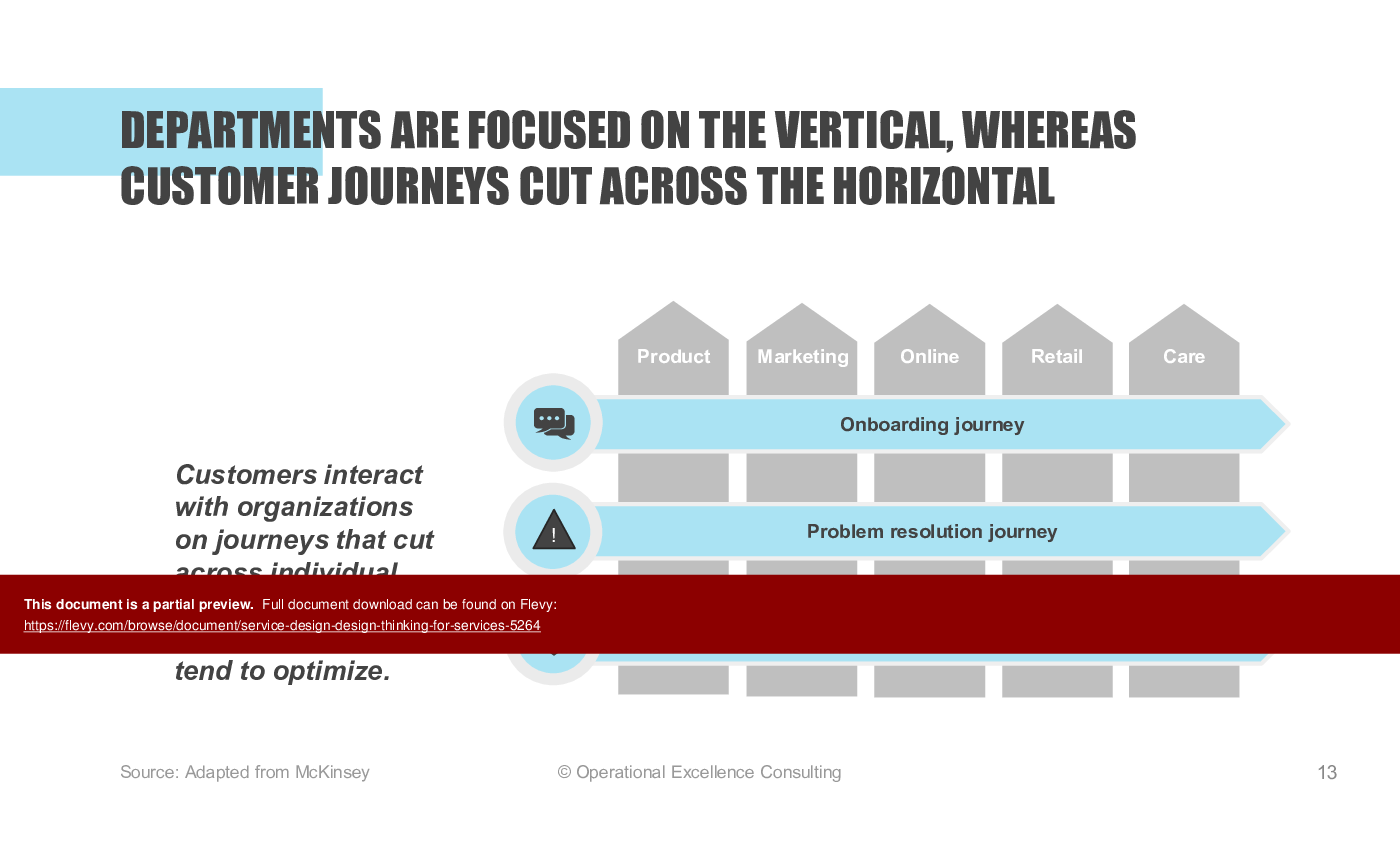
In many organizations, departments are focused on "vertical" functional optimization, while customer journeys cut "horizontally" across those silos. This disconnect leads to stored data silos, limited visibility into cross-functional handoffs, and a failure to meet rising expectations for seamless, omni-channel experiences. To survive, organizations must move from "Traditional Thinking" (flawless planning and avoiding failure) to "Service Design Thinking" (enlightened trial-and-error and failing fast).
What is Service Design?
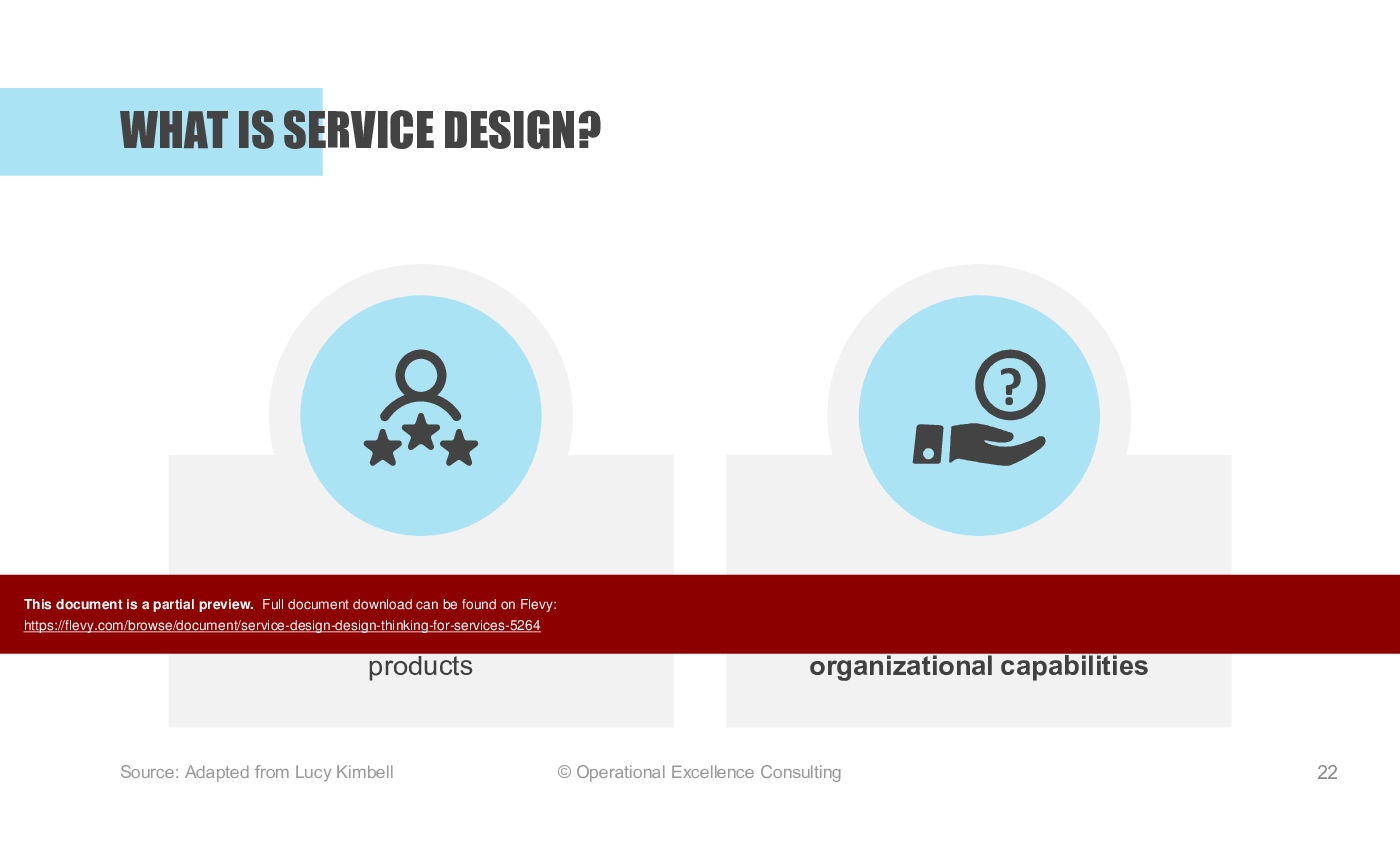
Service Design is a holistic, co-creative approach that seeks to balance aesthetics and human needs with organizational capabilities. It integrates the Three Lenses of Human-Centered Design: Desirability (do customers want it?), Feasibility (can we deliver it?), and Viability (is it profitable?). It is not just about "customer service"—it is a management approach and a cross-disciplinary language for changing reality.
Strategic Benefits of the Holistic Approach
By adopting this Service Design methodology, your organization establishes a shared, cross-disciplinary language for innovation. You will move beyond "fixing touchpoints" to designing new business models and increasing overall value to society. This resource ensures that your organization doesn't just "talk about designers" but becomes a design-led enterprise capable of outperforming competitors through superior service stories.
TARGET AUDIENCE
This resource is engineered for Service Excellence Practitioners, Operations Managers, and Business Architects who need a "Big Picture" systems view. It is ideal for leadership teams tasked with designing new business models, deepening customer relationships, or leading large-scale digital transformations across multiple departments.
LEARNING OBJECTIVES FOR STRATEGIC LEADS
• Master Systems Thinking: Learn to penetrate complex interconnections and understand how small changes affect the entire service ecosystem.
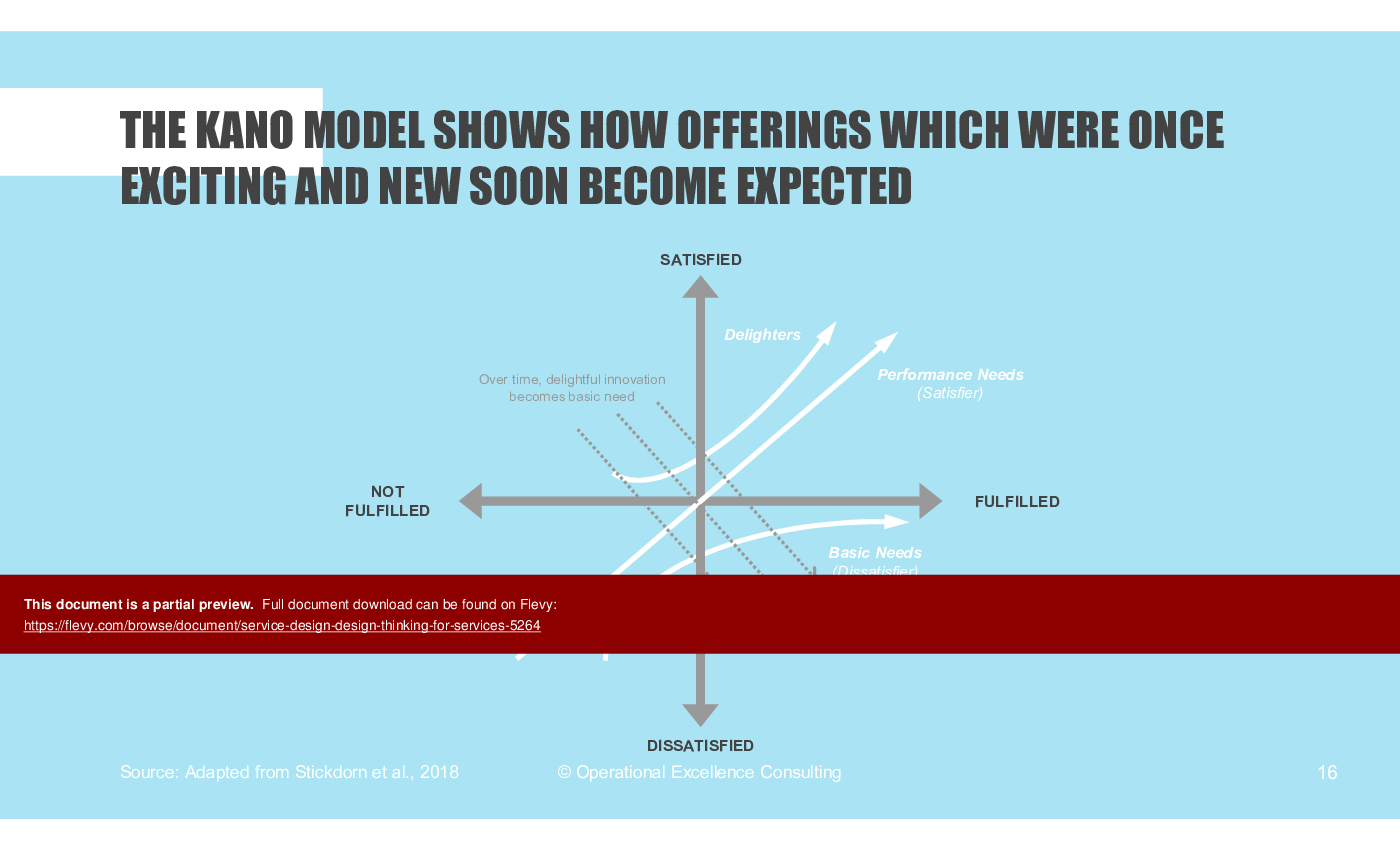
• Apply the Kano Model: Categorize customer preferences into Basic Needs, Performance Needs, and "Delighters" to drive innovation that exceeds expectations.
• Visualize the Invisible: Connect frontstage customer actions with backstage employee processes and technical support systems.
• Architect Business Value: Utilize advanced canvases to determine the "Fit" between value propositions and specific customer segments.
COMPREHENSIVE TRAINING CURRICULUM
1. Foundations of Service Design: Explore the 1984 Harvard Business Review origins and the "era of the smart customer".
2. Systems Thinking Integration: Shift paradigms to focus on the big picture and the gradual nature of interconnected change.
3. The Empathy Phase: Deep-dive into customer "pains, gains, and jobs-to-be-done" using advanced Persona and Empathy Mapping.
4. Journey Mapping & Moments of Truth: Identify the key interactions that have the biggest impact on customer perception across touchpoints and channels.
5. Service Blueprinting: Map the "Line of Visibility" to connect customer experiences with internal operational dependencies.
6. Advanced System Mapping: Develop Stakeholder, Value Network, and Ecosystem Maps to visualize human-machine and machine-machine interactions.
7. Value Proposition Design: Master the Value Proposition Canvas to ensure your service alleviates extreme pains and creates essential gains.
8. Business Model Integration: Align your service activities using the 9 building blocks of the Business Model Canvas.
9. Service Prototyping: Execute high-fidelity walkthroughs, including "Acting as Prototyping" and role-play simulations.
THE MASTER SERVICE TOOLKIT
This package includes 10+ professional-grade templates for deep-dive workshops:
• Strategic Modeling: Business Model Canvas and Value Proposition Canvas.
• Service Architecture: Service Blueprint and 5-Step Journey Diagram templates.
• Advanced Mapping: Ecosystem/System Mapping and Stakeholder Relationship templates.
• Workshop Support: Suggested facilitation techniques, warm-ups, and flexible agendas (2-hour to full-day).
Got a question about the product? Email us at support@flevy.com or ask the author directly by using the "Ask the Author a Question" form. If you cannot view the preview above this document description, go here to view the large preview instead.
PRESENTATION DEEP DIVE ANALYSIS
This deep-dive analysis was generated from the full 143-slide PowerPoint presentation.
Source: Best Practices in Design Thinking, Systems Thinking PowerPoint Slides: Service Design (Design Thinking for Services) PowerPoint (PPTX) Presentation Slide Deck, Operational Excellence Consulting
ABOUT THE AUTHOR

Operational Excellence Consulting, founded in 2009 by Allan Ung, draws from extensive experience at Microsoft, IBM, and Underwriters Laboratories (UL). We specialize in strategy deployment, customer experience design, and operational excellence, applying Design Thinking, Lean, and Systems Thinking to maximize customer value and minimize waste.
Our
... [read more]
Ask the Author a Question
You must be logged in to contact the author.




























